UC Davis Chile

UC Davis MBA Team Completes Global Centers Project in Chile

To spur its Global Centers strategy, UC Davis Global Affairs partnered with the Graduate School of Management (GSM) to engage a team of six part-time MBA students through the Integrated Management Project, the school’s capstone course. The team’s project involved surveying stakeholders on campus and traveling to Chile for meetings with institutions—in tandem with researching and developing a strategy for the first UC Davis Global Center within Global Affairs.

Faculty Director of Global Centers Appointed for Latin America and the Caribbean

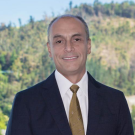
The UC Davis Global Centers initiative— which aims to leverage campus strengths and expand mutually-beneficial partnerships in regions around the world—is set to move forward with the appointment of Lovell “Tu” Jarvis as the Faculty Director of Global Centers for Latin America and the Caribbean. Jarvis will bring strategic leadership to the development the first UC Davis Global Center, building on existing partnerships and linkages in the region.

Araucaria's disease is due to a combination of environmental stress and fungi

Freddy Boehmwald, biotechnologist and Coordinator for Bioproducts at the University of California, Davis in Chile (UC Davis Chile) who has been in charge of investigating the damage to the leaves which has killed 2% of the population of the araucaria trees and affected over 90% of the rest, affirmed that together with the National Forest Corporation (Conaf), the conclusion is that a fungus or a group of fungi combined with hydrological stress dating back at least seven years may be responsible.

The Wonder Plant That Could Slash Fertilizer Use

A team of researchers led by Alan Bennett from UC Davis has shown that the secret of the corn’s success lies in its aerial roots—necklaces of finger-sized, rhubarb-red tubes that encircle the stem. These roots drip with a thick, clear, glistening mucus that’s loaded with bacteria. Thanks to these microbes, the corn can fertilize itself by pulling nitrogen directly from the surrounding air.

Can We Grow One of the World's Largest Food Crops Without Fertilizer?

Alan Bennett, distinguished professor of plant sciences at UC Davis and executive director of UC Davis Chile, is part of a multidisciplinary team of researchers from UC Davis, the University of Wisconsin–Madison, and Mars, Incorporated that has made a remarkable discovery: an indigenous variety of Mexican corn that can also fix nitrogen from the atmosphere, instead of requiring synthetic fertilizers.

UC Davis opens Life Sciences Innovation Center in Chile

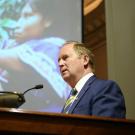
Michelle Bachelet, president of Chile, Linda P.B. Katehi, chancellor of the University of California, Davis, and U.S. Ambassador Michael A. Hammer opened the UC Davis-Chile Life Sciences Innovation Center in Santiago, Chile. The center’s long-term goal is to support research, development and economic competitiveness in Chile and California with a focus on the agricultural industry, including plant breeding, postharvest and climate-change technologies