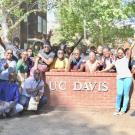
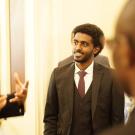
UC Davis welcomed its 29th cohort of Hubert H. Humphrey Fellowship Program participants on Aug. 13 — 11 accomplished mid-career professionals from 11 different countries who are spending the 2019-20 academic year strengthening their professional skills, improving their leadership abilities, and engaging in meaningful collaboration.
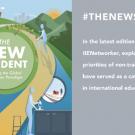
As SIOs we must see internationalization as not just a goal in itself; it’s also a way to advance the university mission and student success. This includes shifting away from a focus simply on mobility to adapting our strategies to meet changing experiences, aspirations, and needs of students.
Change is inevitable. Senior international officers (SIOs) must keep up with these shifts, facilitating access to global learning that prepares each and every one of our students for current and future challenges and opportunities. We must also ensure that we recognize and cultivate the capabilities of our students coming to campus with significant experiences navigating across cultures and systems.
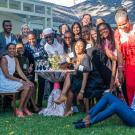
On June 19, UC Davis welcomed 24 young African professionals for its six-week Mandela Washington Fellowship. The fellows, all leaders in their respective fields, will be in Davis through July 28 for a program organized by UC Davis Global Affairs. This year’s fellows are the fourth cohort that UC Davis has hosted since its inaugural fellowship in 2016.
On June 19, UC Davis Global Affairs welcomed 24 young professionals from Sub-Saharan Africa as part of its fourth Mandela Washington Fellowship, the flagship program of the Young African Leaders Initiative.
Global academic projects and internships, study abroad, and international research do more than help you to reach your academic goals. They also broaden your horizons through exposure to hands-on experiences and new cultures in diverse settings. At UC Davis, students are gaining skills and partnering with collaborators in all corners of the world.
Through programming in partnership with businesses, nongovernmental organizations, and local and state government agencies, the Public Management Institute at UC Davis exposes Mandela Washington Fellows to a diversity of perspectives on public management.
At the Mandela Washington Fellowship Presidential Summit, Fellows—elected as representatives of the 20 academic host institutions—present short, dynamic ignite talks on the themes equality, ethics, and opportunity. Below is the text from Abraham Genetu Tiruneh's 2018 ignite talk.
I am not going back to Ethiopia! And you shouldn’t go back home, either.