Discover how healthy soil in home gardens supports biodiversity, food security and climate resilience while advancing global sustainability in this series intended to explore the connection between soil and the SDGs.
California and Africa have set the blueprint for a new model of international climate cooperation—a unique climate and economic partnership with Kenya and Nigeria delivering policy certainty, affordable technology and unlocking catalytic capital.
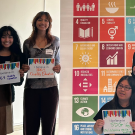
Over the past five years, UC Davis has served as co-lead of the Association of Pacific Rim Universities APWiL Mentoring Program, supporting nearly 400 participants from more than 30 APRU member universities.
The University of California, Davis, Chile Life Sciences Innovation Center, together with leading Chilean universities, has been awarded funding from Chile’s National Agency for Research and Development (ANID) to establish the Center for Advancing Agri-Food System Transformation (CA₂FST). The center has been designated a Center of National Interest and will receive approximately $6.9 million for an initial five-year period, with the possibility of a subsequent five-year extension.
Chancellor May shares several examples of how UC Davis research partnerships serve the world, including those aided by Seed Grants for International Activities.
Chancellor Gary S. May led a delegation to Kenya to advance a landmark partnership between the State of California and the Government of Kenya focused on climate action, clean transportation, climate smart agriculture, public health and innovation. The delegation was jointly organized by UC Davis Global Affairs, Institute of Transportation Studies and the Office of the Special Envoy on Climate of Kenya.
UC Davis students turned their classroom into a hub for real-world impact, partnering with the City of Davis to shape its updated General Plan. By listening to farmworkers, immigrants, and other often-overlooked voices, they uncovered critical insights on housing, transportation, and environmental justice.
This piece explores how empathy, when practiced consistently and deeply, can serve as a powerful motivator in achieving the United Nations’ Sustainable Development Goals. By countering desensitization and embracing empathy starting from within, individuals can take meaningful action toward a more equitable, compassionate, and sustainable world.
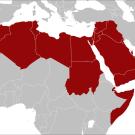
Mapping the Production of Knowledge (MPK) on Women and Gender in the Arab Region is delighted to announce the launching of the MPK Database. The MPK database lists approximately 20,000 academic references on women and gender in the Arab region published from 1970-2022.
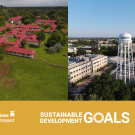
The University of California, Davis and EARTH University in Costa Rica were appointed as the new United Nations Academic Impact (UNAI) Sustainable Development Goals (SDG) Hub Co-Chairs for SDG Goal 2: Zero Hunger.